
Induction cap sealers and cap handling equipment
We supply induction cap sealers for hermetic foil sealing of bottles, jars and canisters, together with equipment for closure manufacturers: wad inserting (cap lining) machines, cap assembly machines, vision inspection systems and seal integrity testers. The equipment is used on filling lines for pharmaceuticals, food and beverages, cosmetics, household and agrochemicals and lubricants, and suits HDPE, LDPE, PET and PP containers as well as glass containers with plastic caps.
Induction cap sealers
Induction sealing is a non-contact way to seal a container. The cap carries a multi-layer liner: pulpboard, wax, aluminium foil and a polymer layer matched to the container material. The sealer induces an electromagnetic current in the foil, the foil heats up, and the polymer layer melts and bonds to the lip of the container. The result is a hermetic, tamper-evident membrane that prevents leakage, keeps air out and extends shelf life.
Manual and semi-automatic sealers
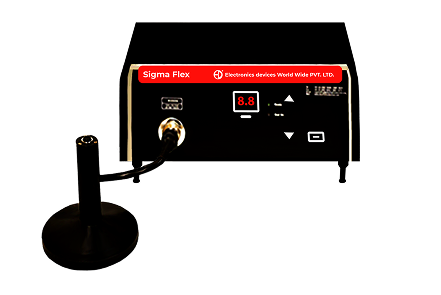
- Manual sealer for laboratories and small batches: 20–120 mm caps, 4–6 caps per minute, about 8 kg
- Semi-automatic benchtop sealer: 15–20 bottles per minute
- Digital control with timer, 230 V supply, fast changeover
- Built for continuous 24/7 operation
Automatic inline sealers
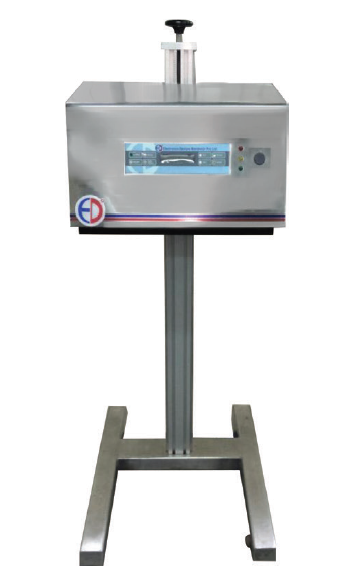
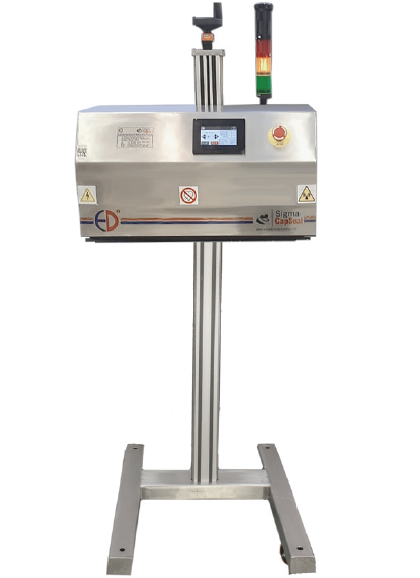
- Mounted over the filling line conveyor, after the capping machine
- Compact models for 20–85 mm caps and conveyor speeds up to 7.5 m/min
- High-output models for conveyor speeds up to 24 m/min
- Air-cooled design — no water connection needed
- Flat, tunnel and custom sealing heads for child-resistant (CRC), dome, spout and snap-on caps
- Microprocessor or touchscreen control, safety alarms, frame on casters
The sealer is selected for the cap diameter, liner type and line speed. Send us container and cap samples or drawings and we will select the model and sealing head.
Induction sealers for pharmaceutical lines
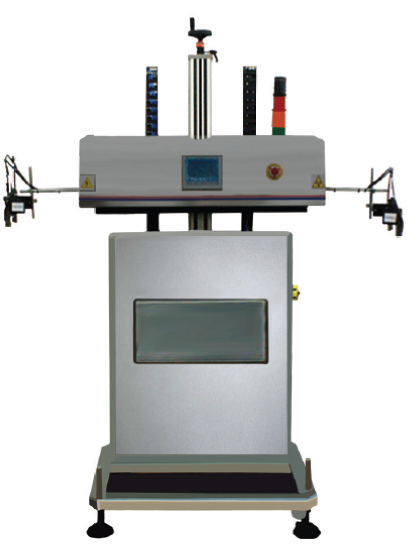
For GMP production we offer induction sealers with an integrated rejection system and software that meets 21 CFR Part 11 requirements for electronic records.
21 CFR Part 11 version
- Electronic data storage and backup
- Password protection and user management
- Audit trail
- Batch report generation
- Automatic rejection of bottles with seal defects
Special solutions
- Sealing of twin-port caps for infusion bottles, with two cameras inspecting the inside and outside of the cap
- Capless induction sealing: the foil is bonded directly to the container, the field is focused on the seal area only, with no hot surfaces and lower energy use
Wad inserting (cap lining) machines
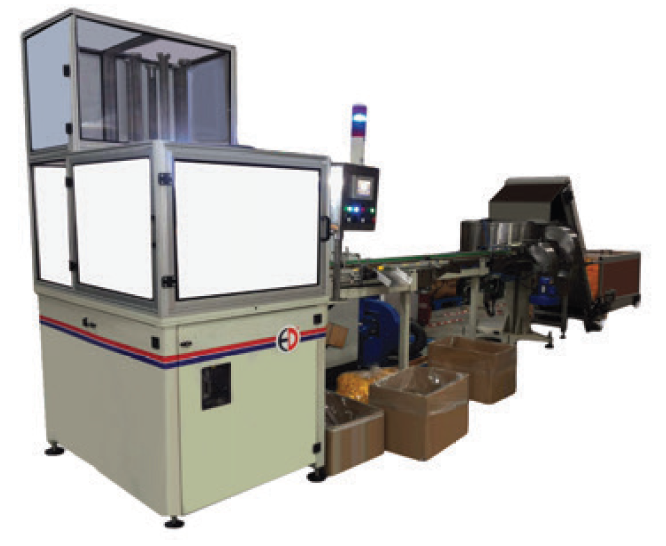
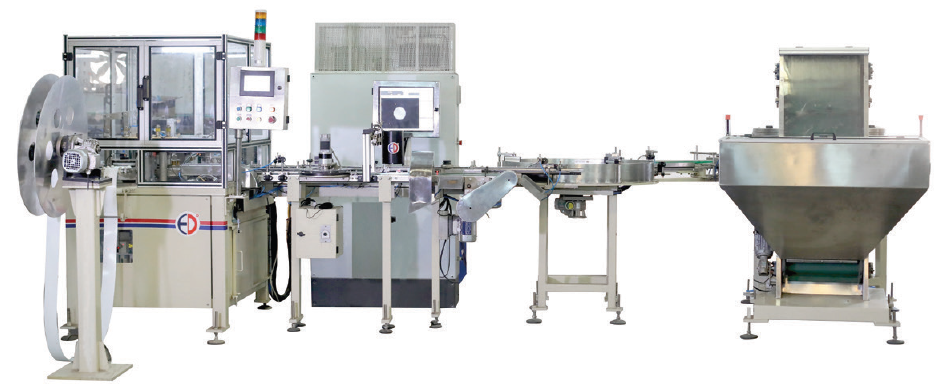
Machines that insert sealing and induction liners (wads) into plastic caps — equipment for closure manufacturers and contract packers. Caps are fed into the pockets of a rotary star wheel, and vacuum heads pick pre-cut wads from a magazine and place them in the caps. A roll-fed version that punches wads straight from the reel is also available.
Specifications
- Output from 100 to 700 caps per minute, depending on the model
- Cap diameter 20–100 mm
- Wad thickness from 0.2 mm
- Induction liners and expanded polyethylene (EPE) liners
- One, two or four vacuum heads
- Roll-fed version: 150–500 caps per minute, 1-up, 2-up or 3-up punching
Options
- No-wad and reverse-wad detection
- Vision camera with rejection
- Product and batch counters
- Rotary feeder, cap elevator, vibratory bowl feeder
- Hot-melt or cold-glue application
- Remote access and connection to data collection systems
The machine is designed for quick changeover to another cap diameter and for maximum use of the liner material.
Cap assembly and closing machines
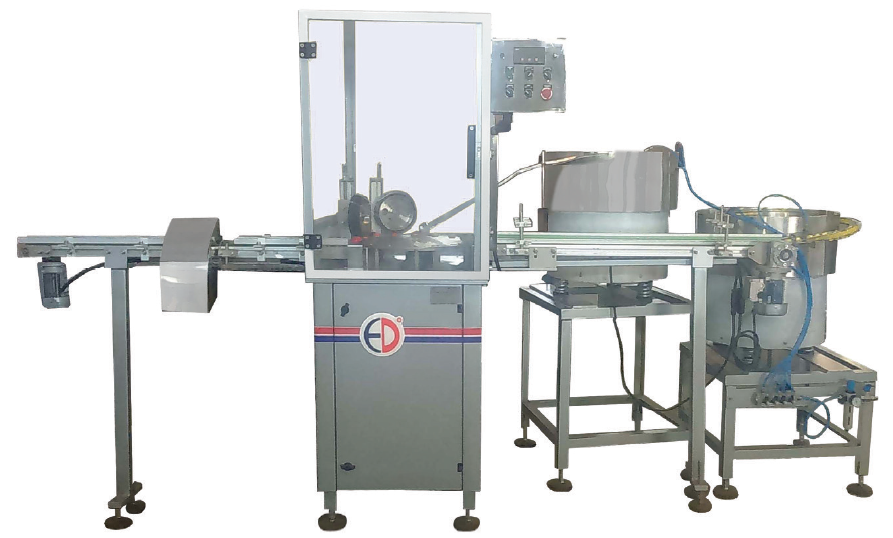
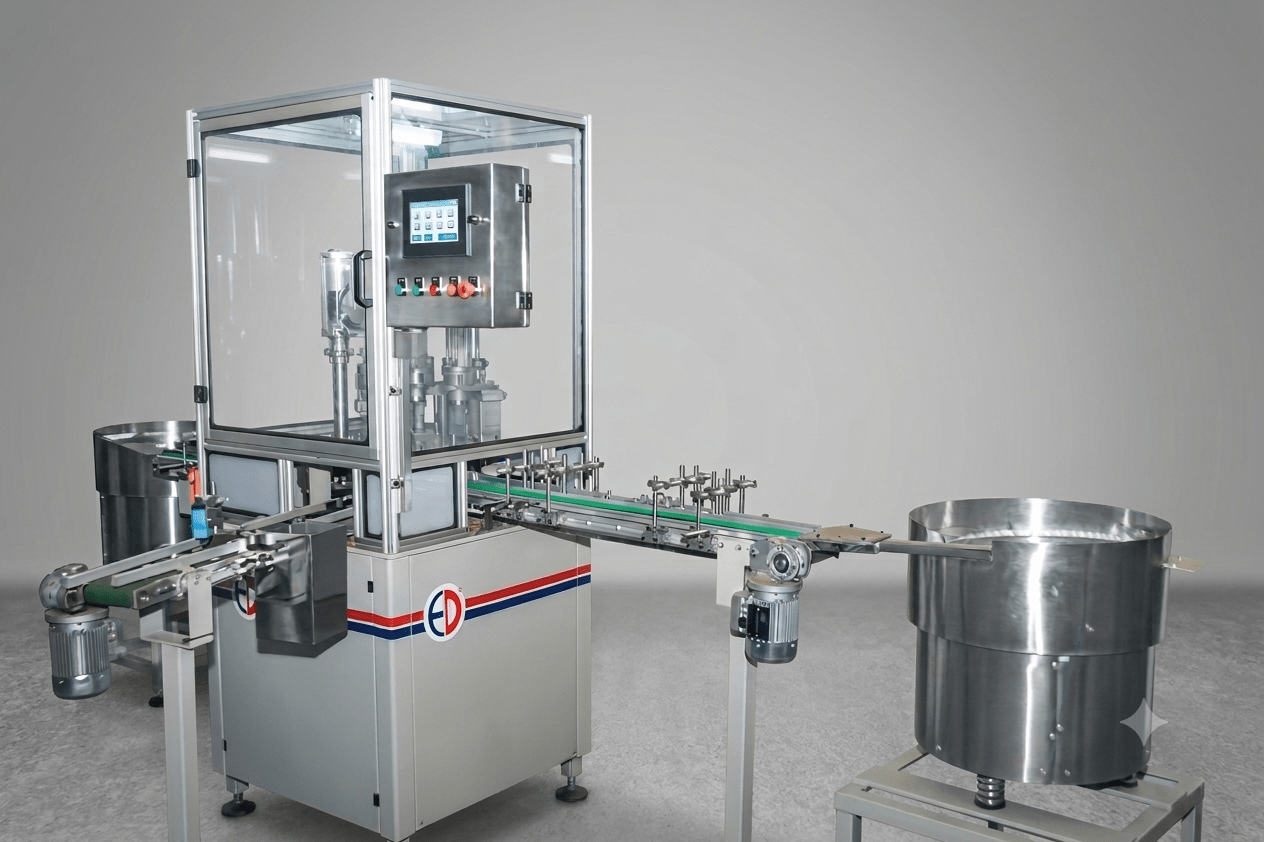
Equipment for manufacturers of plastic closures and dispensers: assembly of multi-piece caps, closing of flip-top caps after moulding, and assembly of lotion pumps.
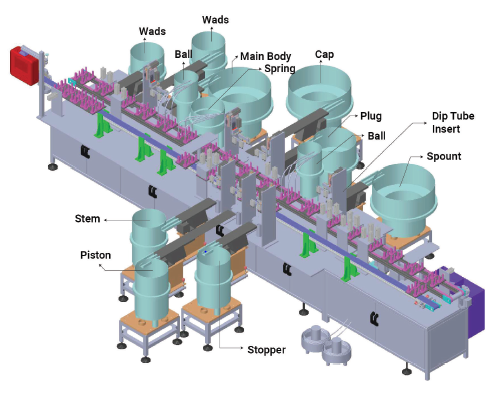
Cap assembly
- Bottom and top parts are fed to star wheels and joined by a pressing roller
- Output from 120 caps per minute, depending on cap size and geometry
- CT and CRC (child-resistant) caps, rectangular, spout, push-pull and disc-top caps, ring-and-plug closures, two-piece oil caps
Flip-top cap closing
- About 100 caps per minute
- Hot-air hinge heating, folding against a stationary guide, locking by roller and pneumatic cylinder
- Tooling made for the cap shape, including oval caps
- Cap-contact parts in AISI 304 stainless steel; PLC with touchscreen HMI
Lotion pump assembly
- 100–110 assemblies per minute
- Components fed from vibratory bowls, dip tube insertion
- Leak test of every unit with automatic rejection
Cap and seal quality inspection
Vision inspection and seal testing systems are built into the line, check every item and reject defective ones automatically.
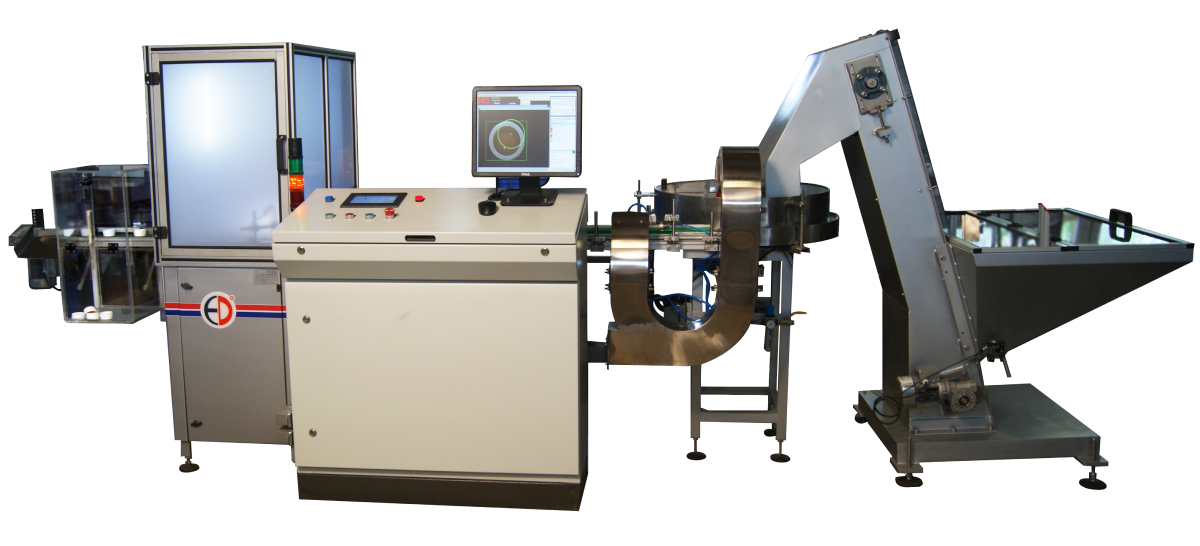
Vision inspection system
- Caps: black spots, pinholes, shrinkage, warpage, cracks, short shots, scratches
- Wads: missing, reversed or shifted wad, damage, foreign particles
- Bottles: thread damage, flash, scratches, ovality, foreign particles
- Labels: presence, position, barcode verification, double labels
- Storage of recipes, defect images, reports and audit trail
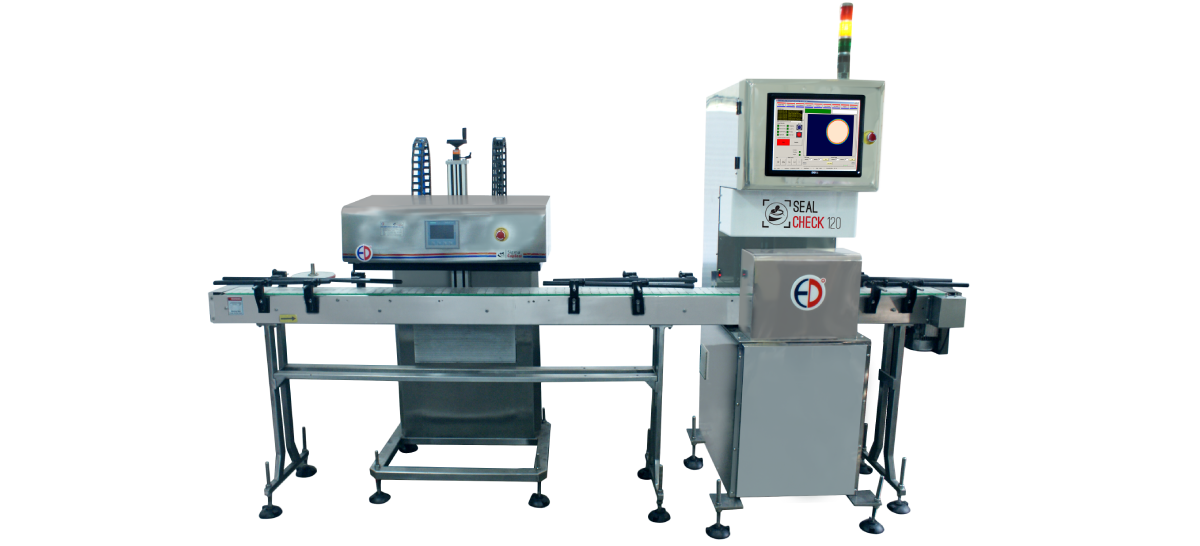
Induction seal inspection
- Detects over- or under-heated foil, partial sealing, cut or missing foil, unsealed and missing caps
- Lockable rejection bin, PLC, industrial PC, UPS
- 21 CFR Part 11 compliance: passwords, five user levels, unalterable audit reports
- Recipe management; production, alarm and rejection reports
How to choose an induction sealer
To get a quotation quickly, please send us:
- Container material and volume: HDPE, PET, PP, glass
- Cap diameter and type, photo or drawing
- Liner (wad) type in the cap
- Product being filled
- Line output and conveyor speed
- Version required: manual, semi-automatic or inline
- Validation and 21 CFR Part 11 requirements
If possible, send container samples with caps — this lets the seal quality be checked before the equipment is delivered.
Induction sealing FAQ
What is an induction cap sealer and what is it for?
An induction cap sealer (induction sealing machine) bonds aluminium foil to the neck of a bottle or jar through the cap that is already applied. This gives a hermetic, tamper-evident seal used for medicines, food supplements, sauces, edible oil, dairy products, cosmetics, household chemicals, agrochemicals and lubricants.
Which containers can be sealed?
Plastic bottles, jars and canisters made of HDPE, LDPE, PET and PP, and glass containers with plastic caps. The polymer layer of the liner is matched to the container material.
Manual or automatic sealer — which one to choose?
A manual sealer suits laboratories, trial runs and small batches. A semi-automatic sealer covers small-scale production of up to 15–20 bottles per minute. If you have a filling line with a conveyor, you need an automatic inline sealer selected for the cap diameter and line speed.
Is cooling water required?
No. The sealers are air-cooled, so they need neither a water connection nor a separate chiller.
How much does an induction sealer cost?
The price depends on the sealer type, cap diameter, sealing head and options, so there is no fixed price list: we calculate the cost for each enquiry and send a quotation.
Where to buy an induction sealer in Ukraine and Europe?
Induction cap sealers, wad inserting machines, cap assembly machines and seal inspection systems can be ordered from us. Send the container, cap and output details and we will select the equipment.
Need an induction sealer?
Send us the container, cap and line output details — we will select the equipment and send you a quotation.